What It Is
A lateral thigh lift, also known as an outer thigh lift, is a cosmetic surgical procedure that removes excess skin and fat from the outer thighs and hip area, creating a smoother, more toned contour. Unlike the medial thigh lift, which targets the inner thighs, the lateral approach reshapes the outer thigh and hip line, areas that often sag after weight loss or due to aging.
The procedure improves both leg aesthetics and body proportions, especially for patients concerned with drooping skin or stubborn fat on the outer thighs.
Why It’s Done
Patients choose a lateral thigh lift because:
- They have loose skin on the outer thighs and hips after weight loss.
- Outer thigh sagging makes the legs appear bulky and uneven.
- They want smoother body lines and better fit in clothing.
- They experience discomfort or chafing due to skin folds.
Good candidates include:
- Men and women with moderate to severe sagging of the outer thighs.
- Patients at or near a stable weight.
- Non-smokers in good health with realistic expectations.
Alternatives
- Medial thigh lift: Targets inner thigh sagging instead of the outer thigh.
- Spiral thigh lift: Corrects circumferential thigh laxity (inner, outer, front, and back).
- Liposuction alone: Effective for fat deposits but not for loose skin.
- Non-surgical tightening: Radiofrequency or ultrasound-based devices may help mild sagging but cannot remove significant excess skin.
Preparation
Before undergoing a lateral thigh lift in Korea, patients will:
- Have a consultation to assess skin laxity, fat deposits, and hip contour.
- Complete medical tests (bloodwork, ECG if needed).
- Stop smoking and alcohol for at least 4 weeks before surgery.
- Avoid blood-thinning medications and supplements.
- Plan for 2–3 weeks of recovery and arrange help at home.
How It’s Done
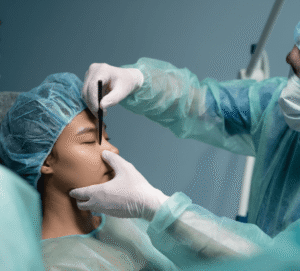
- Anesthesia: Performed under general anesthesia.
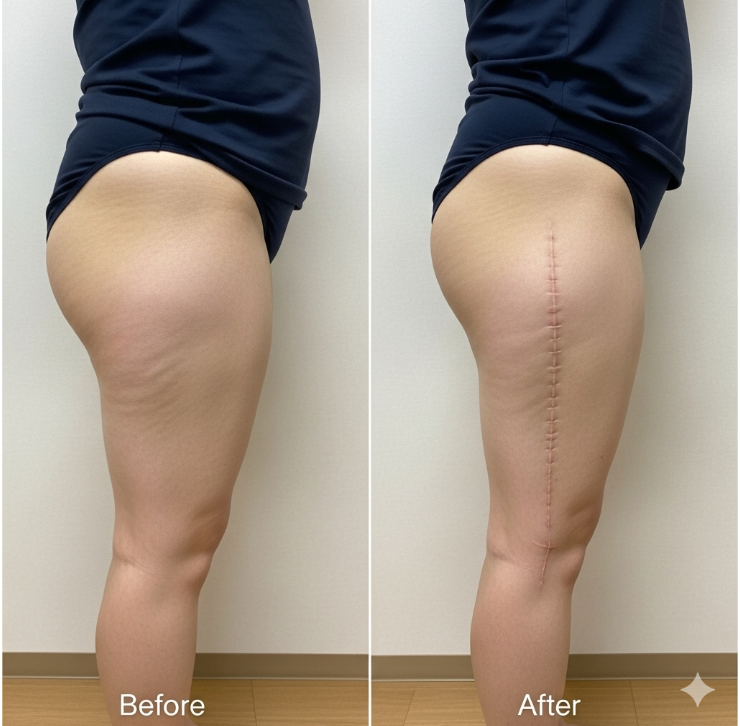
- Incision: A horizontal incision is usually made along the outer hip or upper thigh, placed where it can be hidden by underwear or swimsuits.
- Skin and fat removal: Excess tissue is excised, and liposuction may be used to refine the contour.
- Skin tightening: The remaining skin is pulled upward and secured for a firmer shape.
- Duration: 2–3 hours, sometimes requiring an overnight hospital stay.
Recovery
- First week: Swelling, bruising, and tightness in the outer thighs are common. Pain is manageable with medication.
- Compression garment: Worn for 4–6 weeks to minimize swelling and support healing.
- Return to work: Most patients resume light activities in 1–2 weeks.
- Exercise: Gentle walking is encouraged, but strenuous activity and leg workouts should be avoided for 4–6 weeks.
- Final results: Noticeable improvements appear within weeks, with full contour visible in 3–6 months.
Possible Complications
- Bruising, swelling, or temporary numbness in the thighs.
- Scarring along the hip or outer thigh (usually hidden by clothing).
- Delayed wound healing due to thigh movement.
- Rare but serious risks: infection, seroma, or asymmetry.
Treatment Options in Korea
Diagnosis
Korean surgeons evaluate skin laxity, fat distribution, and hip-to-leg proportions through physical examination. 3D imaging is sometimes used to simulate post-surgery results and plan incision lines.
Medical Treatments
For mild cases, non-surgical skin tightening or liposuction may be suggested as alternatives.
Surgical or Advanced Therapies
- Lateral thigh lift for outer thigh and hip sagging.
- Combination with liposuction for contour refinement.
- Extended thigh lift or spiral lift may be recommended if skin laxity extends further.
Rehabilitation and Support
- Regular follow-up appointments to monitor wound healing and scar progression.
- Scar management therapies such as silicone sheeting, laser, or microneedling.
- Lymphatic drainage massage and physiotherapy to reduce swelling and stiffness.
- International patients benefit from clinics offering multilingual post-op care in Korea.