What it is
→ Daylight photodynamic therapy (daylight PDT) is a modern, less painful form of photodynamic therapy used primarily for actinic keratoses (precancerous sun-damaged lesions) and widespread actinic damage.
→ Instead of activating the photosensitizing cream with artificial blue or red light in a clinic, natural daylight is used as the activating light source.
→ A topical photosensitizer (commonly methyl aminolevulinate or aminolevulinic acid) is applied to the skin, and the patient then spends time outdoors under daylight conditions.
→ The advantage is that light exposure is continuous and lower in intensity, which reduces pain and irritation compared to conventional PDT while still effectively clearing lesions.
Why it’s done
→ Daylight PDT is done to:
- Treat multiple actinic keratoses across large sun-exposed areas like the face, scalp, or arms.
- Provide a field therapy option that treats both visible and hidden lesions.
- Reduce pain and discomfort, since daylight PDT is better tolerated than traditional PDT.
- Improve skin texture, tone, and appearance while also lowering skin cancer risk.
- Offer a practical, time-efficient solution, as patients can walk outside instead of sitting under clinical lights.
→ It is particularly recommended for patients with widespread actinic damage, fair skin, or a history of extensive sun exposure.
Alternatives
→ Alternatives to daylight PDT include:
- Conventional PDT → clinic-based with red or blue light activation.
- Topical treatments → 5-FU, imiquimod, diclofenac gel, or retinoids.
- Cryotherapy → freezing lesions individually with liquid nitrogen.
- Laser resurfacing or chemical peels → improving cosmetic appearance while reducing precancerous lesions.
- Surgical excision → reserved for confirmed skin cancers, not broad actinic damage.
→ Daylight PDT is chosen when patients want less pain, good cosmetic outcomes, and efficient treatment of large skin areas.
Preparation
→ Preparing for daylight PDT involves:
- Dermatology consultation → confirm diagnosis of actinic keratoses and suitability for daylight treatment.
- Avoid tanning or sunburn → skin must not be recently burned before the session.
- Clean skin → no makeup, sunscreen, or creams on the treatment day.
- Keratolytic preparation → dermatologists may use a mild peel, microdermabrasion, or curettage before applying the photosensitizer to enhance penetration.
- Weather planning → daylight PDT requires sufficient outdoor daylight, so treatment is scheduled when weather conditions allow (not heavy rain or extreme cold).
- Protect non-treatment areas → sunscreen may be applied to areas not undergoing PDT.
How it’s Done
→ A typical daylight PDT session includes:
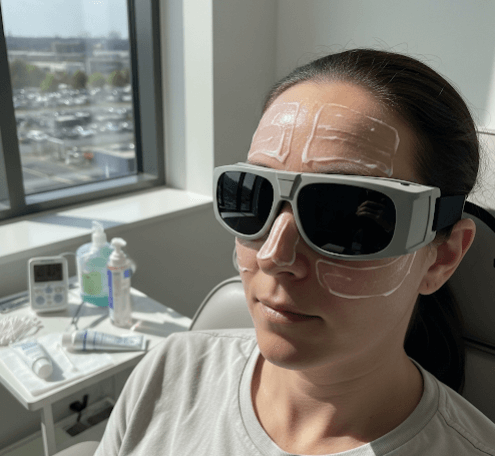
- Application of photosensitizer → cream applied evenly across the treatment area (face, scalp, or arms).
- Waiting period → after 30 minutes indoors, patients go outside to begin daylight exposure.
- Daylight activation → patient spends about 2 hours outdoors in normal daylight conditions. Even on cloudy days, daylight is sufficient for activation.
- Completion → after exposure, the cream is gently removed, and soothing ointments are applied.
- Follow-up → dermatologist reviews healing and lesion clearance after 1–2 weeks.
→ The procedure is simple and less intimidating since no bright lamps are used.
Recovery
→ Recovery from daylight PDT is quicker and milder than conventional PDT:
- Day 1–3 → mild redness and irritation similar to light sunburn.
- Day 3–7 → scaling, flaking, or peeling as lesions heal.
- Day 7–14 → skin clears, smoother and more even in tone.
→ Patients should:
- Avoid direct intense sunlight immediately after treatment.
- Apply gentle moisturizers and healing ointments.
- Use broad-spectrum sunscreen daily to prevent new sun damage.
→ Most people resume normal activities the same day, with complete healing in 1–2 weeks.
Complications
→ Daylight PDT is generally safe, but possible effects include:
- Redness and peeling during recovery.
- Mild burning or stinging, less than conventional PDT.
- Temporary pigmentation changes (lighter or darker spots).
- Photosensitivity reaction if patients get too much sun exposure immediately after treatment.
→ Serious complications such as infection or scarring are extremely rare.
Treatment options in Korea
→ Korea offers state-of-the-art daylight PDT programs, especially in dermatology hospitals and specialized clinics.
- Advanced protocols → Korean dermatologists use the latest photosensitizers with precise application methods for maximum safety and results.
- Integration with other therapies → daylight PDT is often combined with topical treatments or light chemical peels for enhanced outcomes.
- Cosmetic focus → Korean clinics emphasize both medical clearance of lesions and aesthetic skin rejuvenation.
- Preventive culture → patients are educated on daily sun protection and lifestyle habits to minimize further actinic damage.
- Accessibility → major centers in Seoul, Busan, and Daegu provide daylight PDT for both locals and international patients.
- AI skin imaging → some Korean hospitals use advanced imaging to track lesion clearance and sun damage reversal.
- Medical tourism → daylight PDT is popular among international patients seeking minimally painful, highly effective actinic keratosis treatment.
→ With Korea’s focus on innovation, cosmetic integration, and patient comfort, daylight PDT is a leading option for reversing sun damage and preventing skin cancers.