What it is
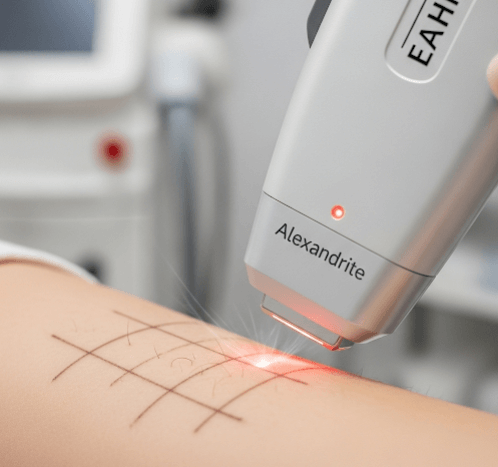
→ Alexandrite laser hair removal is a cosmetic dermatology treatment that uses a 755 nm wavelength Alexandrite laser to target melanin pigment in hair follicles, heating and damaging them to prevent or delay regrowth.
→ This laser penetrates at a moderate depth, making it highly effective for light to olive skin tones (Fitzpatrick types I–III) and for treating fine to medium-thickness hair.
→ Alexandrite lasers are known for their speed, precision, and ability to cover large areas quickly, making them one of the most commonly used laser types worldwide.
→ In Korea, Alexandrite systems are widely available and are often combined with other laser platforms (such as diode or Nd:YAG) for customized, multi-laser treatments tailored to each patient’s skin and hair type.
Why it’s done
→ Alexandrite laser hair removal is performed to:
- Provide long-term reduction of unwanted hair with fewer sessions than IPL or traditional methods.
- Treat fine and light hair that other lasers may not capture effectively.
- Cover large areas efficiently (legs, chest, back).
- Deliver fast, precise results with minimal discomfort.
- Improve skin texture and clarity since Alexandrite lasers can also address pigmentation issues during treatment.
→ It is especially chosen by patients with fairer skin tones who want effective, long-lasting results.
Alternatives
→ Alternatives to Alexandrite laser hair removal include:
- Diode lasers (800–810 nm) → effective for medium to darker skin tones, good for coarse hair.
- Nd:YAG lasers (1064 nm) → safest for darker skin tones, less risk of pigmentation issues.
- IPL (Intense Pulsed Light) → broad-spectrum light, cheaper but less precise and effective.
- Electrolysis → permanent but very slow and painful for large areas.
- Shaving, waxing, or depilatory creams → temporary solutions requiring frequent maintenance.
→ Compared to these, Alexandrite lasers are fast, efficient, and particularly effective for fair-to-light skin patients.
Preparation
→ To prepare for Alexandrite laser hair removal:
- Shave the treatment area 24–48 hours before (roots must remain for targeting).
- Avoid waxing, plucking, or threading for 4–6 weeks before treatment.
- No tanning or sunburn for 2–4 weeks prior.
- Keep skin clean → no lotions, oils, deodorants, or makeup on treatment day.
- Stop harsh skincare products (like retinoids or acids) for 3–5 days before.
- Inform dermatologist of any medications that increase light sensitivity.
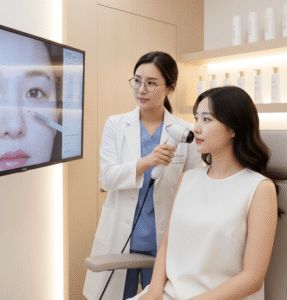
→ In Korea, dermatologists often run a patch test before starting full treatment, especially on sensitive skin.
How it’s Done
→ A typical Alexandrite laser session includes:
- Cleansing → treatment area is cleaned and dried.
- Protective eyewear → worn by both patient and practitioner.
- Laser treatment → Alexandrite laser pulses are applied to targeted areas.
- Cooling systems → built-in cryogen spray or chilled air is used for comfort.
- Duration → small areas (upper lip, underarms) take 5–10 minutes; full legs or back may take 30–45 minutes.
- Aftercare → soothing cream or gel applied immediately.
→ For best results, 6–8 sessions spaced 4–6 weeks apart are usually recommended.
Recovery
→ Recovery from Alexandrite laser hair removal is typically mild:
- Immediate effects → redness, swelling, or warmth like a mild sunburn.
- 24–48 hours → irritation resolves, and skin feels normal.
- Weeks later → treated hairs shed naturally, leading to smoother skin.
→ Aftercare includes:
- Avoid hot showers, saunas, or vigorous exercise for 1–2 days.
- Apply soothing aloe vera or panthenol creams.
- Use broad-spectrum sunscreen daily to prevent pigmentation.
- Wear loose, breathable clothing after large-area treatments.
→ Patients can resume most daily activities immediately.
Complications
→ Alexandrite laser hair removal is safe, but possible side effects include:
- Temporary redness, swelling, or itching.
- Pigmentation changes → hyperpigmentation or hypopigmentation if sun exposure occurs after treatment.
- Mild burns or blisters (rare with modern Korean devices).
- Ingrown hairs → uncommon, usually improved after repeated sessions.
- Paradoxical hypertrichosis (rare) → fine hair near treated zones grows thicker.
→ Risks are minimized when performed by experienced dermatologists with proper laser settings.
Treatment options in Korea
→ Korea is internationally recognized for laser dermatology excellence, and Alexandrite systems are widely used:
- Cutting-edge technology → clinics in Seoul, Busan, and Daegu use FDA-approved Alexandrite platforms with integrated cooling.
- Combination treatments → Korean dermatologists often combine Alexandrite with diode or Nd:YAG lasers for optimal results based on hair type and skin tone.
- Fast and efficient sessions → full legs or chest can be treated in under an hour.
- Comfort-first approach → advanced cooling systems minimize pain.
- Aesthetic synergy → many Korean clinics offer skin whitening, pigmentation removal, or rejuvenation treatments alongside hair removal for smooth, even-toned skin.
- Medical tourism support → English-speaking staff and tailored treatment packages are available for international patients.
→ With advanced technology, aesthetic expertise, and precise treatment protocols, Korea is one of the best places to undergo Alexandrite laser hair removal.